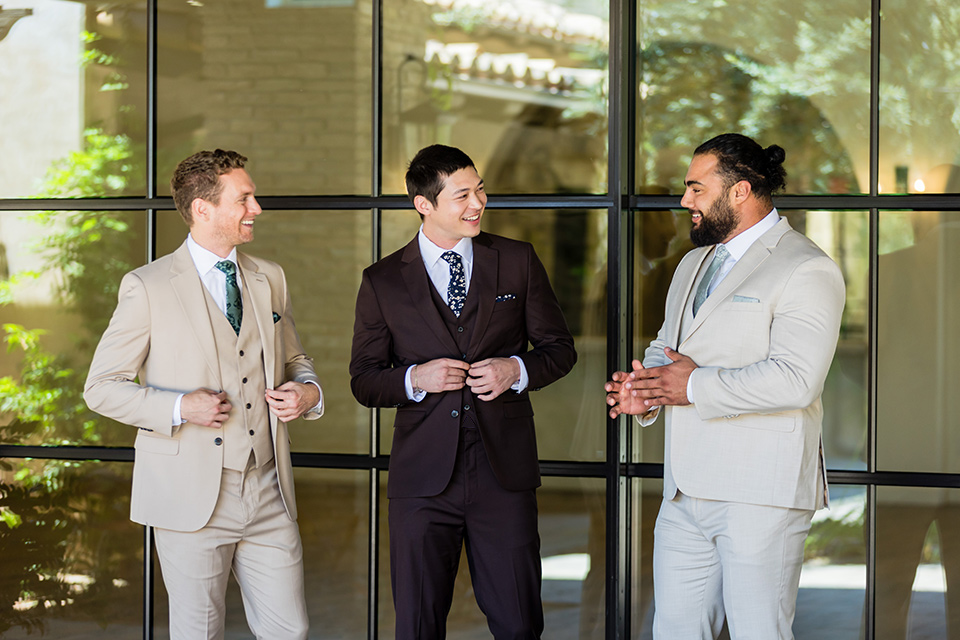
Photography: BYC Photography
How should a suit fit? A suit should fit close to the body without feeling tight, with the jacket shoulders aligned properly, sleeves and pants at the right length, and enough room for comfortable movement.
A great suit does more than make you look sharp. It balances your proportions, moves with you, and feels comfortable from the first button to the last step. Whether you are dressing for a wedding, a job interview, or a special event, knowing how a suit should fit helps you choose the right size, request the right alterations, and avoid common mistakes. Use this guide to evaluate fit from shoulders to hem, measure yourself at home, and understand what can- and cannot- be tailored so you feel confident in any setting. If you are asking yourself “how should a suit fit?” this guide walks you through the answers in clear, practical steps.

What Does a Perfectly Fitted Suit Look Like?
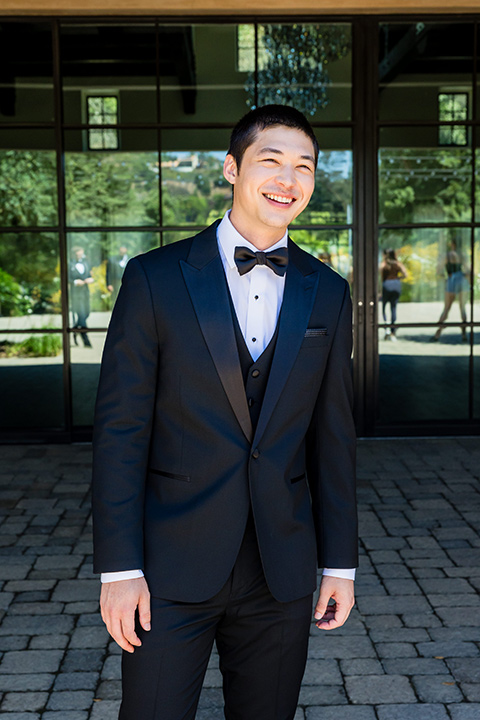
A properly fitted suit creates a clean, balanced silhouette. The jacket’s shoulders align with your natural shoulder edge, the waist is shaped but not tight, and the trousers drape smoothly with a neat break above the shoes. The result is streamlined, not restrictive, with uninterrupted lines that flatter your frame from every angle. If you have ever wondered 'how should a suit fit?', start by looking at these overall proportions and balance.
For overall proportions, aim for a gentle V-shape through the torso, created by a slightly tapered waist and straight, clean lines down the sides of the jacket. The jacket hem should generally align with the midpoint between your shoulder and the floor and cover the seat. Trousers should sit comfortably at your natural waist or slightly below, depending on rise, with a leg shape that matches your style and build.
Fit cues vary slightly by body type:
- Slender builds: A modern tailored or slim silhouette adds shape without excess room. Watch for collapsing shoulders or gaping at the chest, which indicate the jacket is too large or the structure is off.
- Athletic builds: Look for clean shoulder support, enough room across the upper back and chest, and a tapered waist. Ensure you can move freely through the lats and shoulders without pulling.
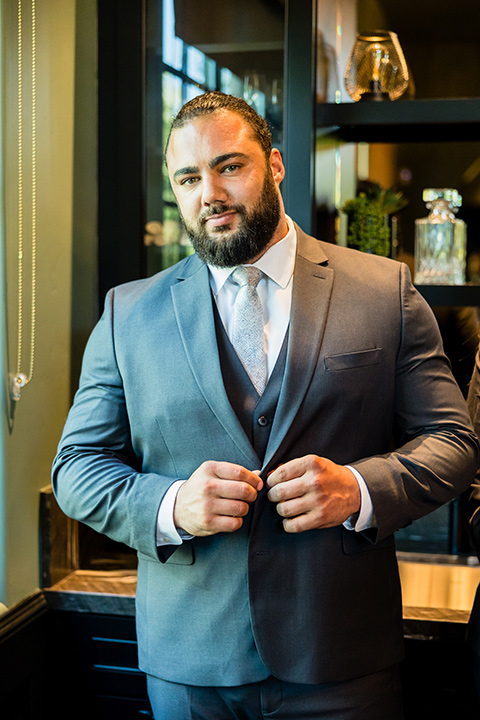
- Fuller builds: Prioritize smooth drape across the chest and seat, a gently shaped waist, and a straight or lightly tapered trouser that does not cling. Avoid overly slim cuts that pull at the button or create horizontal creases.
Common red flags include shoulder divots, X-shaped stress lines at the front button, lapels bowing away from the chest, a collar gap at the back of the neck, and ripples across the trouser seat. Sleeves that swallow your hands, puddling at the trouser hem, and excess fabric pooling at the small of the back are also clear signs that adjustments are needed.

How Should a Suit Jacket Fit?
Start with the shoulders. The shoulder seam should meet the point where your shoulder naturally drops- neither short nor extending onto your upper arm. A subtle roll at the sleeve head is fine, but dents or divots suggest an incorrect shoulder size or sleeve pitch. Test mobility by crossing your arms, reaching forward, and giving yourself a light hug. You should feel some resistance, not strain. If the shoulders are off, most other alterations will not rescue the fit, so prioritize this area first. These are the fundamentals in answering how should a suit jacket fit and how is a suit jacket supposed to fit for most body types.
Next, check the chest, waist, and lapels. Button the top button on a two-button jacket. The front should lie flat without an X-shaped pull at the button. You should be able to slide a flat hand between your chest and the jacket with a comfortable- not loose- feel. Lapels should sit flush against your chest; if they flare outward, the chest is too tight or the jacket is not balanced for your posture. If the lapel looks unusually flat and the front gapes, the jacket is likely too big. Use these cues any time you are comparing how a suit jacket should fit versus how are suit jackets supposed to fit across different brands.
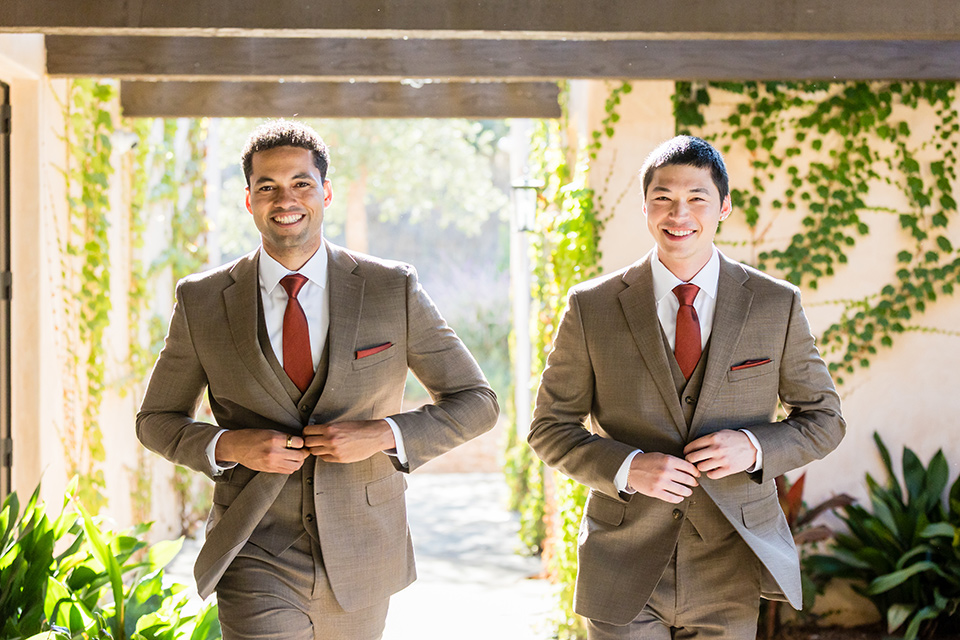
Finish with sleeve length and jacket length. Aim to show about one quarter to one half inch of shirt cuff when your arms rest naturally at your sides. If you wear a watch, ensure there is room without the sleeve riding up. For jacket length, the hem should cover the seat and roughly align with the midpoint between the base of the neck and the floor. Another quick check: the hem should fall near the knuckles of your thumb when your arms are relaxed, adjusted for your height and personal style. These checkpoints apply equally when assessing how should a suit coat fit, since “jacket” and “coat” are used interchangeably in suiting.
How Should Suit Pants Fit?
Start at the waist and seat (another word for your ‘behind’). Trousers should sit comfortably without relying on a belt to stay up. The waistband should be snug enough to hold position, but not pinch. Across the seat, the fabric should drape smoothly over your hips and glutes with no horizontal pulling or vertical rippling. Diagonal lines from the waistband to the back of the thigh indicate the seat is too tight, while sagging under the seat means there is too much room.
Rise and crotch comfort determine how the trousers feel throughout the day. Choose a rise that complements your torso and posture. A higher rise sits closer to the natural waist and can lengthen the leg line. Mid-rise is versatile and works for most body types. Low rise reads more casual and may visually shorten the legs. You should be able to sit and stand without discomfort or pulling in the crotch. A low crotch depth can bind when sitting, while an overly high rise without enough ease can feel restrictive.
Leg shape and hem break complete the look. A slim leg follows the thigh’s line and tapers toward the ankle for a contemporary profile. A tailored leg offers a gentle taper for a timeless look. A classic leg is straighter with more room through the thigh. For the hem, a slight break- where the front of the hem just touches the top of the shoe- looks clean and modern. No break, hovering just above the shoe, works well with slimmer or cropped styles. A full break creates a softer, traditional look. Avoid stacking or puddling at the ankle, which can make the silhouette appear sloppy.
How to Measure Yourself and Your Current Suit
Accurate measurements make it easier to select the right size and anticipate alterations. Focus on the chest, waist, hips, inseam, sleeve, and shoulder. Understanding these numbers helps you evaluate how should a suit fit? before you even step into a fitting room.
- Chest: Wrap a soft tape around the fullest part of your chest with arms relaxed. Keep the tape level and snug, not tight.
- Waist: Measure at your natural waistline- above the hips and below the ribs- where your body creases when you bend to the side.
- Hips: Measure the fullest part around your seat and hips.
- Inseam: Measure from the crotch seam to your preferred hem point.
- Sleeve: Measure from the shoulder point to your wrist bone with a slight bend in your arm.
- Shoulders: Measure straight across the back from the edge of one shoulder bone to the other.
Measuring an existing jacket can provide a helpful reference. Lay it flat and button it.
- Shoulder width: Measure straight across the back from shoulder seam to shoulder seam.
- Chest (jacket): Measure from underarm to underarm across the front and double the number.
- Jacket waist: Find the narrowest point of the front, measure across, and double.
- Jacket length: Measure from the base of the collar down the back to the hem.
- Sleeve length: Measure from the shoulder seam to the end of the cuff.
For trousers:
- Waist: Measure across the waistband and double.
- Rise: Measure from the crotch seam to the top of the waistband.
- Thigh: Measure one inch below the crotch across the leg and double.
- Inseam: Measure from the crotch seam to the hem.
For accuracy, stand naturally, breathe normally, and avoid sucking in your stomach. Wear a fitted T-shirt and lightweight trousers to reduce bulk. Use a flexible cloth tape and a full-length mirror, and ask a friend to help with shoulder and sleeve measurements. If something seems off, measure twice and round to the nearest quarter inch.
If you are having trouble measuring yourself, you can always head into a Friar Tux store location and have one of our stylists measure you. Or you can use our easy online Fit Finder – answer a few simple questions and our fitting algorithm will be able to tell you the best size to order for your new suit or tuxedo!

Tailoring and Alterations: What to Adjust and When
Most suits benefit from subtle alterations to achieve a made-for-you look. Typical jacket adjustments include shortening or lengthening sleeves, tapering the sides for a cleaner waist, and addressing a slight collar gap. For trousers, precise hemming is essential, along with tapering the leg and adjusting the waist and seat for comfort and drape. These refinements can transform an off-the-rack suit into one that looks custom, and they help align what you wear with how a suit jacket should fit and how are suit jackets supposed to fit in practice.
Costs and timelines vary by shop and region, but general expectations include:
- Hemming trousers: usually quick and affordable, often completed in a few days.
- Tapering legs or adjusting waist/seat: typically takes about a week.
- Jacket sleeves: often a week, depending on whether functioning sleeve buttons require more work.
- Complex changes (such as recutting shoulders): highly specialized and often not cost-effective.
Know what can be fixed versus when to size up or down. Tailors can reliably adjust sleeve length, hem trousers, take in or let out the waist and seat, and taper legs. They can also slightly suppress the jacket waist and correct minor collar gaps. Altering shoulders, moving the button stance, or significantly expanding the chest is difficult and rarely recommended. If the shoulders or chest are far off, try a different size or cut. This is why understanding how should a suit coat fit and how is a suit jacket supposed to fit will save you time and money.
Clear communication with your tailor is essential. Bring the dress shirt, shoes, and belt you plan to wear. Button the jacket and stand naturally. Describe how you want it to feel- for example, clean through the waist, a slight break at the hem, or extra room in the thigh for movement. Ask to have both sides pinned symmetrically and walk around to test mobility. Review each change in the mirror and note final measurements for future reference.
Fit Checklist and Buying Tips
Use this checklist when trying on suits in-store or virtually to ensure a dialed-in fit. It also doubles as a quick reference for how should a suit jacket fit and how should a suit coat fit across different cuts and fabrics:
- Shoulders: Seams align with your natural shoulder edge.
- Chest and waist: Button the jacket and check for X-shaped pulling or lapel flare. You should be able to slip a flat hand inside the chest comfortably.
- Jacket length: Hem covers the seat and feels proportional to your height. A quick cue is the hem falling near your thumb knuckles when arms are relaxed.
- Sleeve length: Show about one quarter to one half inch of shirt cuff.
- Mobility: Lift and reach to ensure comfortable movement without strain across the back or shoulders.
- Trouser waist: Stays put without a belt and does not pinch.
- Seat and rise: Smooth drape across the seat and comfortable rise when sitting.
- Leg shape: Select slim, tailored, or classic based on your build and the look you want.
- Hem break: Choose no break, slight break, or full break and confirm it complements your shoes.
- Comfort test: Sit, stand, and walk to confirm all-day comfort.
Match the fit to the occasion and your comfort level:
- Modern tailored fit: A clean, versatile silhouette for weddings, interviews, and everyday office wear.
- Slim fit: A sharper, contemporary profile that suits lean or athletic builds when you want a more fashion-forward edge.
- Classic fit: More ease through the chest, waist, and thigh for traditional styling and all-day comfort.
For formal events, a tailored or classic cut often photographs best and remains timeless.
Care and maintenance preserve your suit’s fit and shape. Hang jackets on wide, contoured hangers to support the shoulders. Brush the fabric to remove surface dirt and use steam to relax wrinkles. Avoid frequent dry cleaning, which can degrade fibers and affect drape. Rotate suits to allow the fabric to recover between wears. Store trousers with creases aligned to maintain a sharp line. Avoid high heat when pressing; use a pressing cloth or professional steaming to protect the fabric and keep seams crisp without shine. With proper care, your suit will maintain its structure and fit for years.
Quick Reference: Fit Targets by Garment Area
|
Area |
What to Look For |
Common Issues |
Usually Tailorable? |
|
Shoulders (Jacket) |
Seam ends at natural shoulder; no dents or divots |
Divots, overhang, collapsing shoulder |
No (choose correct size) |
|
Chest/Lapels |
Front lays flat; lapels sit against chest |
X-pull at button, lapel flaring, gaping front |
Minor adjustments; major size issues require different jacket |
|
Jacket Waist |
Shaped but comfortable; no pulling |
Horizontal creases, excess fabric at back |
Yes (take in/let out slightly) |
|
Sleeves |
Show 1/4–1/2 inch of shirt cuff |
Too long or short; watch interference |
Yes (shorten/lengthen within limits) |
|
Jacket Length |
Covers seat; near thumb knuckles |
Too short or long for height |
Limited (better to choose correct length) |
|
Trouser Waist |
Sits without a belt; no pinching |
Slides down, digs in |
Yes (take in/let out modestly) |
|
Seat |
Smooth drape over hips and glutes |
Ripples, diagonal pulls, sagging |
Yes |
|
Rise/Crotch |
Comfortable when sitting and standing |
Binding, restrictive feel |
Rise cannot be changed; choose correct cut |
|
Leg Shape |
Slim, tailored, or classic to suit build |
Too tight at thigh or too wide at calf |
Yes (taper available) |
|
Hem/Break |
No break, slight break, or full break |
Puddling or stacking |
Yes (hem to desired length) |
Keep this table handy when comparing brands or models. It will help you decide how are suit jackets supposed to fit on your frame and clarify how a suit jacket should fit when you are between sizes.
Pro Tips for a Confident Fit
- Start with the jacket. If the shoulders and chest are wrong, move to a different size or model before considering alterations. This single rule answers much of how is a suit jacket supposed to fit in real life.
- Check posture. An upright or rounded posture can affect collar position and lapel lay. Communicate this to your tailor.
- Try different models. Two suits in the same size can fit differently depending on the cut and canvas structure.
- Wear the right shoes. The heel height changes trouser break; bring the shoes you plan to wear to fittings.
- Mind fabric behavior. Lightweight, high-twist wools drape differently than heavier flannels or blends; adjust expectations accordingly.
- Plan ahead. If you have a firm event date, ask your tailor about timelines before leaving the garment.
- Use consistent checkpoints. Revisit the same cues—shoulder line, lapel lay, sleeve and hem—for a repeatable answer to how should a suit coat fit from one brand to another.
The Bottom Line
A suit should look clean and balanced while allowing you to move comfortably. Prioritize a correct shoulder fit, ensure the chest and lapels lie flat, and fine-tune sleeve and jacket length. Choose trousers that sit comfortably at the waist, drape smoothly through the seat, and finish with a hem break that matches your style. With accurate measurements, smart alterations, and consistent care, your suit will look and feel like it was made for you- no matter the occasion. Keep returning to the core questions- how should a suit fit?, how should a suit jacket fit, and how are suit jackets supposed to fit- so you can shop with confidence and achieve a polished result every time.